Latest blogs
-
How Do I Run Consolidated Group Financial Statements in Xero?
Short answer Xero doesn’t support consolidated group financial statements natively. Each Xero organisation is a single entity — there’s no built-in way to combine multiple organisations into one consolidated P&L, balance sheet, or cash flow, or to eliminate intercompany transactions across them. To run group consolidated reports from Xero, you need either a manual Excel…
-
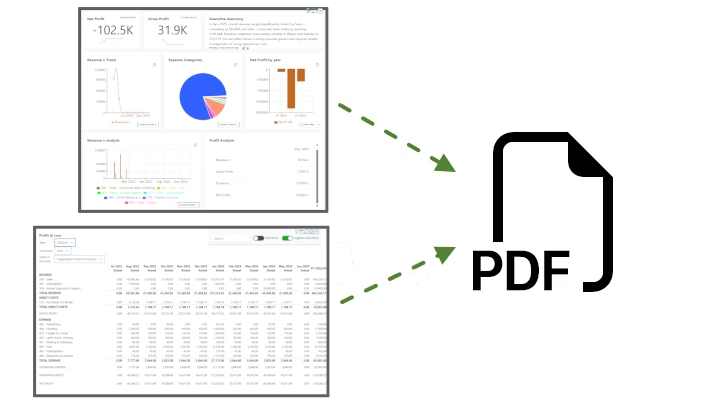
Stop Rebuilding the Same Report Every Month: How BrizoConsol’s Insight Package Automates Client Report Delivery
It’s the last week of the month. You have eight client groups to report on. One client wants a consolidated P&L alongside entity-level breakdowns. Another has a board that only reads one-page cash summaries. A third has investors overseas who need a PDF in their inbox by the 5th — no exceptions. You’ve handled this…
-

Managing Multi-Currency Entities: Challenges and Best Practices
The accounting treatment for multi-currency consolidation — how IAS 21 requires different rates for balance sheet and P&L items, how the currency translation adjustment is calculated and allocated to equity — is a technical problem with a defined solution. The harder challenge is operational: how do you manage a multi-currency entity group in practice, period…
-

Mastering Multi-Country Financial Reporting: Challenges and Pitfalls
Multi-country financial reporting has two distinct layers of complexity. The first is accounting mechanics — currency translation under IAS 21, accounting standard differences between IFRS and local GAAP, different fiscal year-ends. Those are well-documented problems with established solutions. The second layer is operational: the practical challenges of coordinating a close process across time zones, reconciling…
-
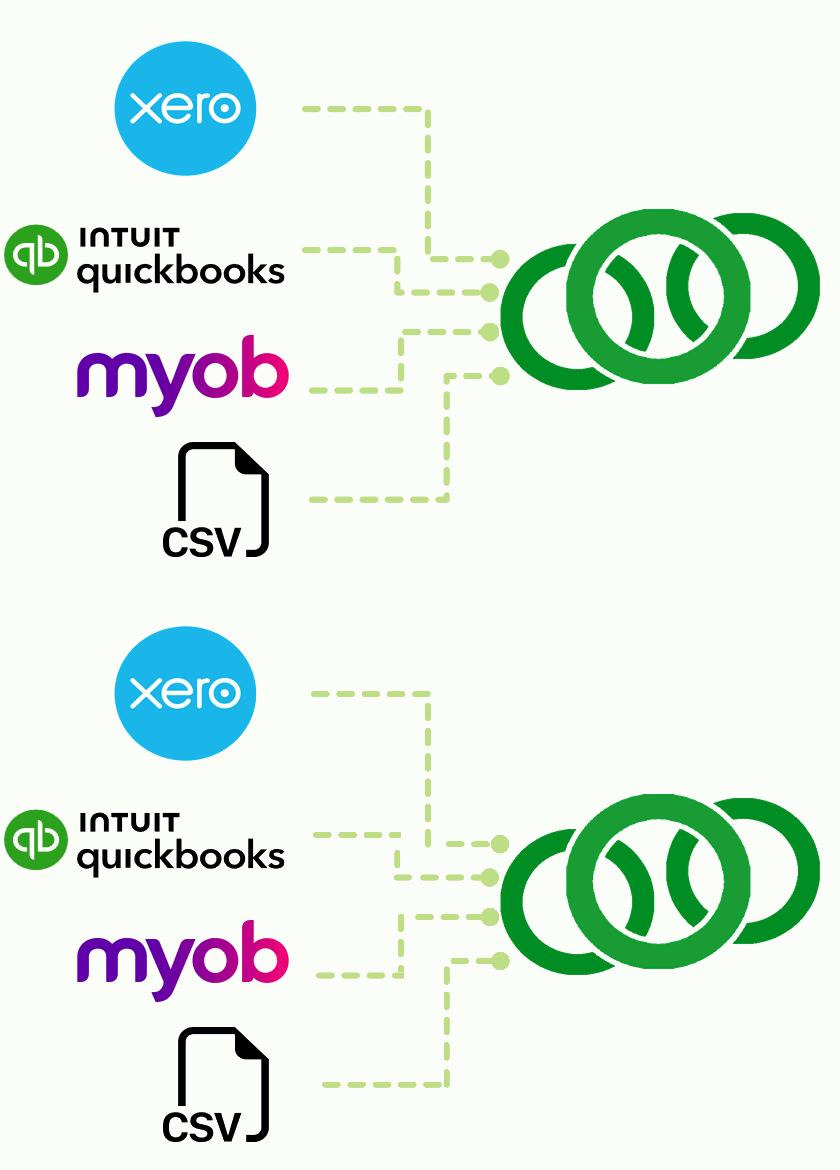
The Hidden Costs of Manually Exporting Data for Financial Reporting
The financial reporting cycle has three stages: data in, consolidation, reporting out. Most attention goes to the middle stage — how the consolidation is done, how long the close takes, how errors are introduced in the adjustments. The input stage — getting data out of accounting systems and into a usable form — gets less…