
As mid-sized companies grow — adding subsidiaries, multiple currencies, and increasingly complex reporting requirements — the choice of consolidation tool becomes critical. A key decision is whether to adopt a cloud-based consolidation platform or continue with an on-premise solution (or even a combination of both). This choice impacts reporting speed, IT overhead, data security, scalability, cost, and long-term agility.
In this article, we’ll unpack:
- What each deployment model really means
- Key differences between cloud and on-premise
- Pros and cons for mid-sized companies
- Practical considerations for making the right choice
- How this decision affects your financial close and reporting process
What Does “Cloud” and “On-Premise” Actually Mean?
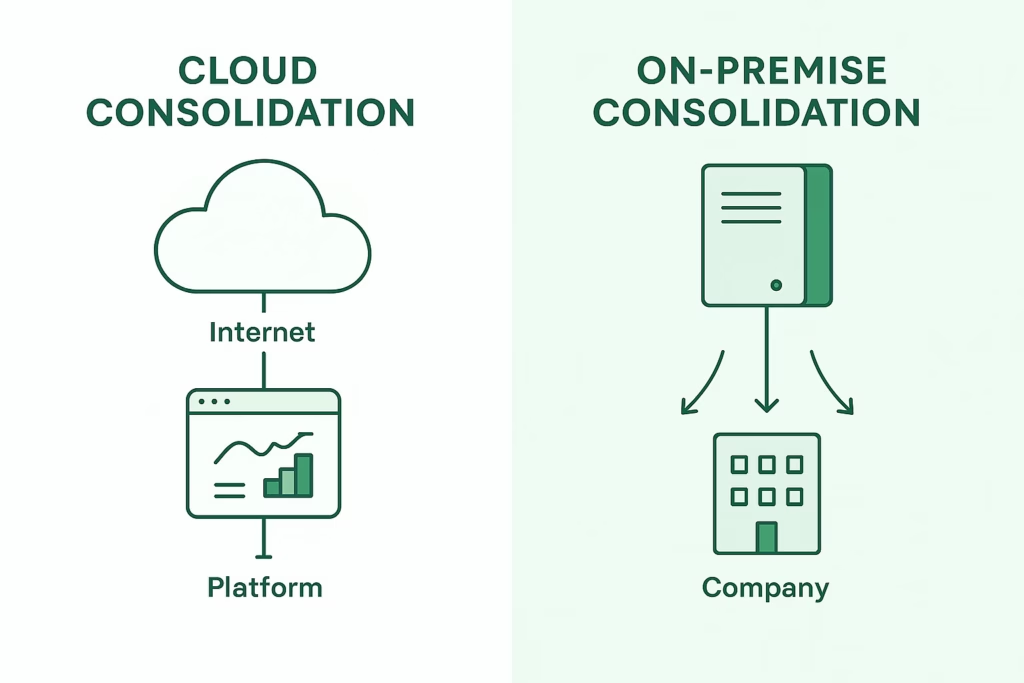
Before comparing models, it’s important to define them clearly:
Cloud Consolidation Tools
These are platforms hosted by a service provider (software as a service or SaaS). The vendor manages infrastructure, updates, security, uptime, and support. Users typically access the system via a web browser.
On-Premise Consolidation Tools
These are installed directly on your company’s own servers and managed by your IT team. You control upgrades, backups, security policies, and hardware.
Both models can support financial consolidation and reporting — but they do so with different trade-offs.
Key Differences Between Cloud and On-Premise
| Aspect | Cloud | On-Premise |
|---|---|---|
| Deployment | Hosted by vendor | Hosted in company data center |
| Upgrades | Automatic | Manual |
| IT Overhead | Minimal | High (internal IT required) |
| Accessibility | Anywhere with internet | Usually internal networks or VPN |
| Scalability | High, nearly instant | Limited by on-premise capacity |
| Cost Model | Subscription (OPEX) | License + hardware (CAPEX) |
| Customisation | Limited but rapidly evolving | High, but costly |
| Security Responsibility | Shared (vendor + customer) | Entirely internal |
Cloud Consolidation Tools: Benefits for Mid-Sized Companies
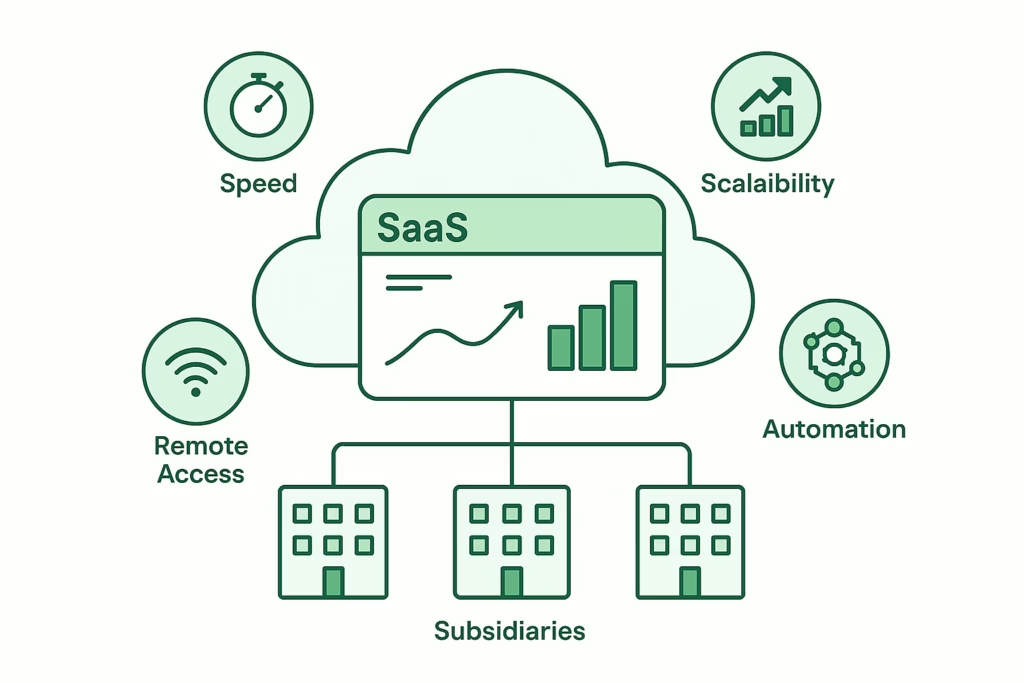
1. Faster Implementation and Updates
Cloud solutions can be rolled out quickly — often within weeks rather than months. Updates, new features, and regulatory changes are delivered automatically.
Why it matters: Mid-sized finance teams often lack bandwidth for lengthy go-lives. Rapid onboarding reduces time to value.
2. Lower IT Burden
With cloud, your IT team doesn’t need to maintain servers, patch software, or manage backups for the consolidation system itself. This frees internal resources for strategic tasks.
Real-world impact: IT can focus on integrations, security policies, and enabling finance, rather than maintenance.
3. Accessibility and Remote Work
Cloud platforms can be accessed anywhere, on any device, which supports remote and distributed teams — an increasingly standard way of working.
4. Built-In Scalability
Cloud systems are designed to scale with the business. When new entities are added, or data volumes increase, the platform grows without additional hardware.
5. Predictable Costs
With subscription pricing, mid-sized companies know their ongoing costs up front. There’s less risk of surprise hardware, upgrade, or maintenance expenses.
On-Premise Tools: When They Make Sense
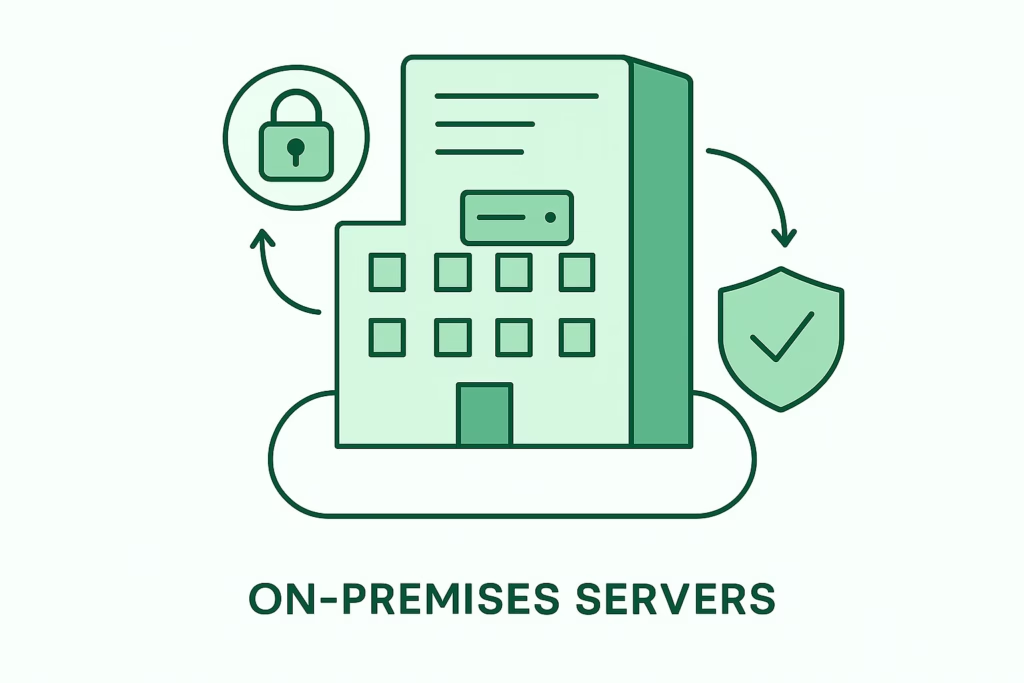
1. Maximum Control
If your company has strict internal policies around data infrastructure, an on-premise solution gives you full control over everything from encryption to uptime strategies.
This can matter in highly regulated industries — though cloud vendors often meet or exceed compliance requirements as well.
2. Advanced Customization
Your IT and finance teams can modify workflows, reports, and integrations at the system level — something that may be harder or more constrained in cloud models.
However, this level of customization often introduces complexity and cost, and makes upgrades harder.
3. Existing Infrastructure Investments
Companies with significant investments in internal systems may be inclined to keep consolidation internal, especially if they are already running other critical financial applications on-premise.
Key Considerations for Mid-Sized Companies
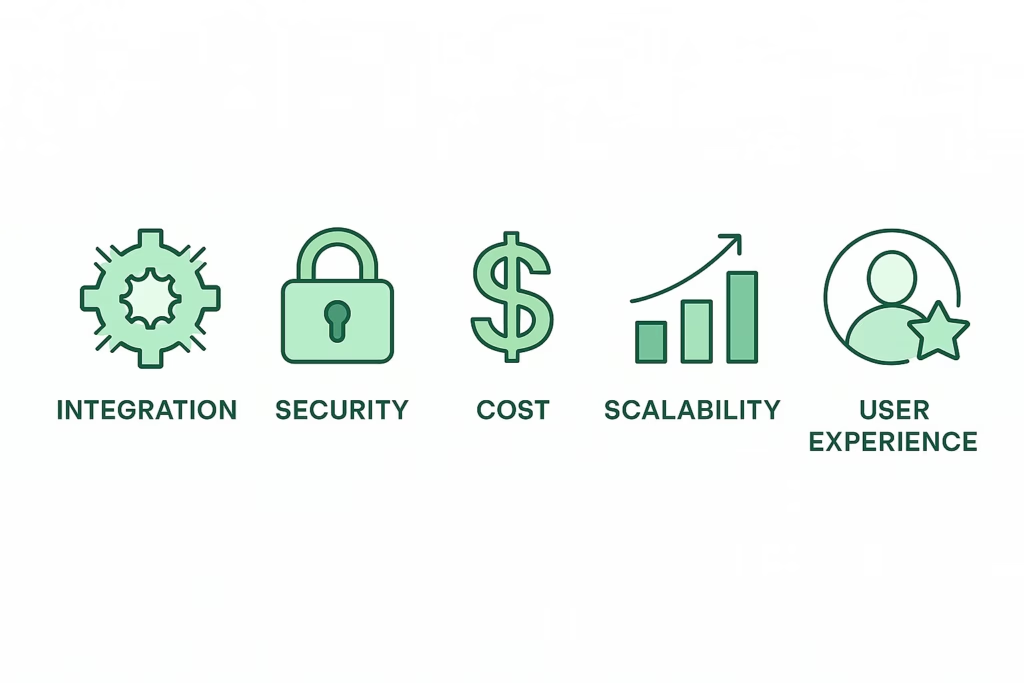
1. Integration with ERP and Source Systems
Whether cloud or on-premise, your consolidation solution must integrate smoothly with your ERP(s), general ledger, and other operational systems.
- Cloud tools often provide pre-built connectors
- On-premise may require custom integration development
2. Data Security and Compliance
Security is often cited as a barrier to cloud adoption, but cloud vendors typically invest heavily in data protection, encryption, and compliance certifications.
Ask:
- Where is data stored?
- How are backups handled?
- Who has access and how is identity managed?
- What compliance standards are met (e.g., ISO 27001, SOC 2)?
3. Long-Term Total Cost of Ownership (TCO)
On-premise solutions often appear cheaper initially but entail:
- Hardware costs
- IT staffing
- Upgrade cycles
- Disaster recovery planning
Cloud solutions shift costs to predictable subscriptions while reducing infrastructure overhead.
4. User Experience and Adoption
Cloud consolidation tools tend to have more intuitive interfaces and faster access to new features. For mid-sized teams, ease of use directly correlates with adoption and process maturity.
How Technology Shapes Consolidation Success
The truth is, consolidation is no longer just about producing financial statements — it’s about delivering insights:
- Who are the top performing regions?
- Where are the anomalies in intercompany eliminations?
- Are currency impacts masking real growth?
- How can finance lead better decisions, not just report the numbers?
Modern cloud-based tools are engineered to support these questions with dashboards, real-time data access, and built-in analytics. They help companies:
- Reconcile faster
- Eliminate errors
- Provide audit trails
- Empower stakeholders with clarity
Cloud vs On-Premise: A Strategic Choice, Not Just a Technical One
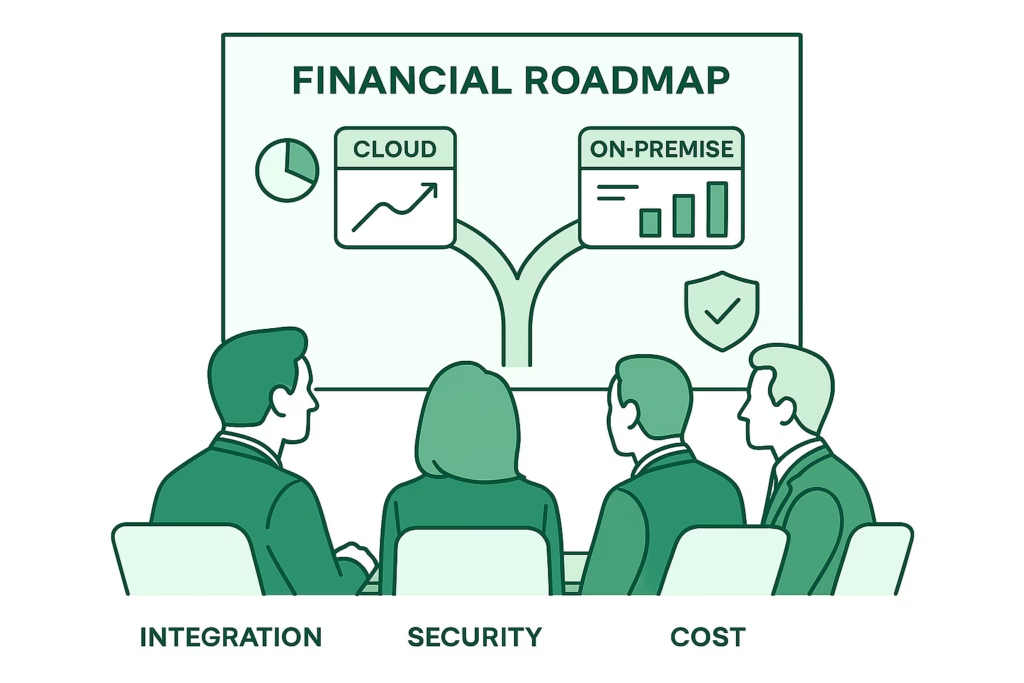
For many mid-sized companies, cloud consolidation tools are rapidly becoming the preferred choice because they:
- Shorten implementation timelines
- Lower internal support requirements
- Offer scalable performance as entities grow
- Provide continuous access to the latest features
However, on-premise still has a place in highly regulated or specialized environments where customization and absolute control override the benefits of cloud agility.
Ultimately, the right choice depends on your company’s strategic priorities, risk tolerance, internal capabilities, and long-term growth plans.
Conclusion: Aligning Tool Strategy with Business Strategy
Consolidation isn’t just about closing the books — it’s about building confidence in the numbers, enabling analysis at speed, and supporting decisions that shape the future of the business.
Mid-sized companies face unique pressures: limited IT resources, growth ambitions, and the imperative to scale reporting without multiplying headcount.
That’s why choosing between cloud and on-premise consolidation tools is not merely a technical decision — it’s a strategic one.
If you prioritize agility, scalability, predictable costs, and rapid time-to-value, a cloud consolidation platform often delivers the clarity and performance mid-sized teams need.
Whatever route you choose, make sure it supports your broader finance transformation goals and empowers the finance team to move from closing the books to owning the narrative.