Latest blogs
-
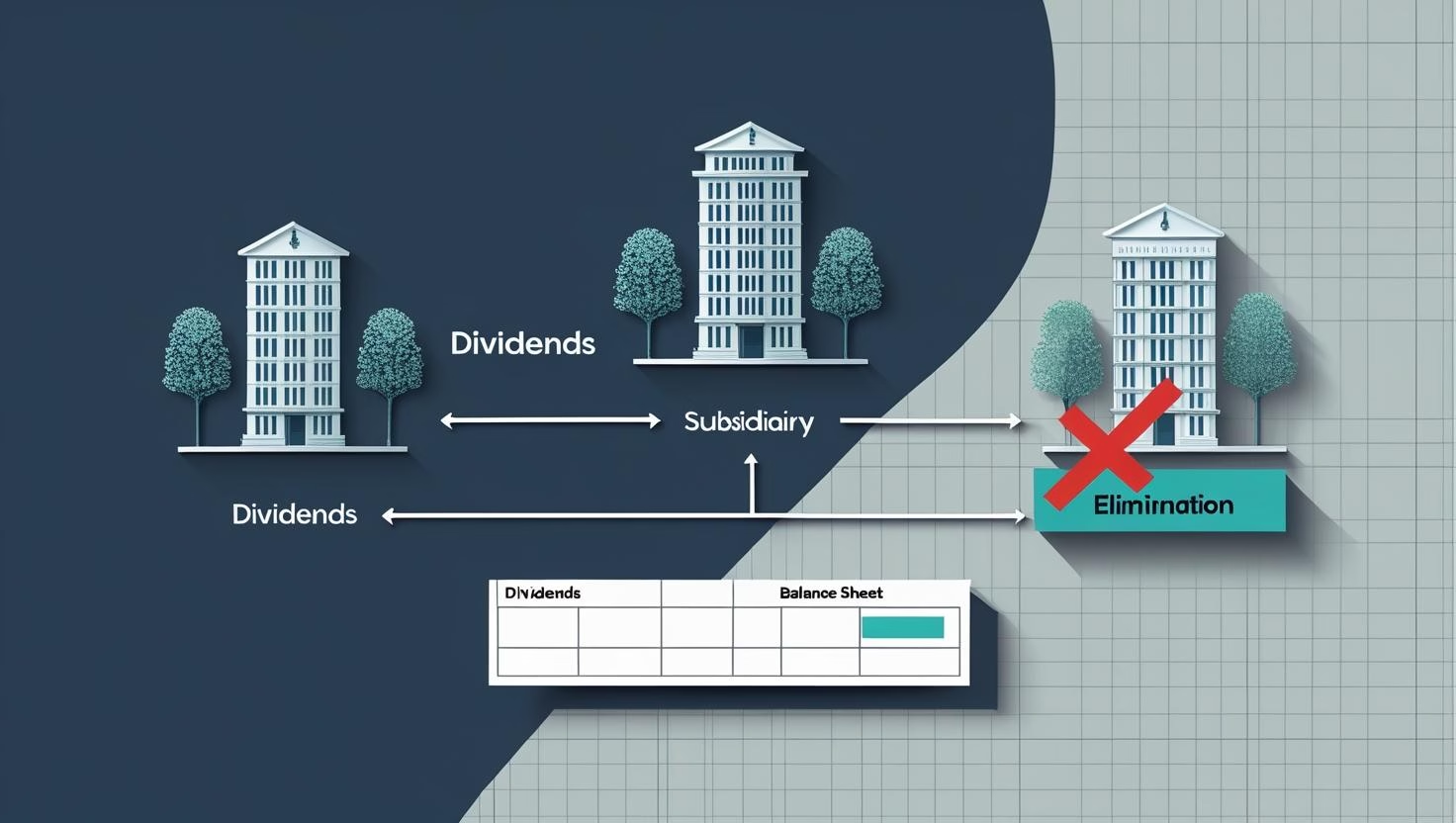
Understanding Intercompany Dividend Elimination in Financial Consolidation
Intercompany dividend elimination is one of the most commonly mishandled adjustments in group financial consolidation. When a subsidiary pays a dividend to its parent or another group entity, both sides record the transaction — but from a consolidated perspective, the money never left the group. If those entries aren’t eliminated, the group’s income and retained…
-
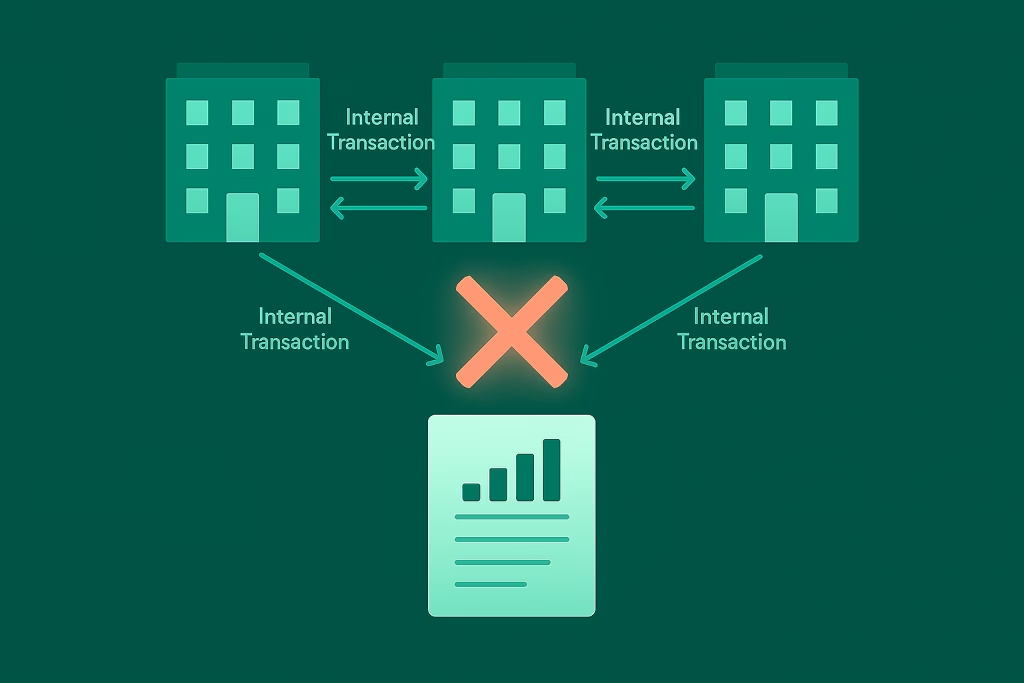
Why Do We Eliminate Intercompany Transactions in Financial Consolidation?
Seeing the Group as One When a group of companies is under common control—such as a parent company with several subsidiaries—the goal of financial consolidation is to present their financials as if they were one single economic entity. This means transactions between the entities in the group are internal, not external, and do not represent…
-

AI and Financial Consolidation: The Future of Multi-Entity Reporting
AI is already doing useful work in financial consolidation — account mapping suggestions, intercompany transaction matching, anomaly flagging in trial balances. These are real, deployed capabilities that compress the mechanical work of the close cycle. But they represent the early layer of a much larger shift in how multi-entity reporting is done. The more significant…
-
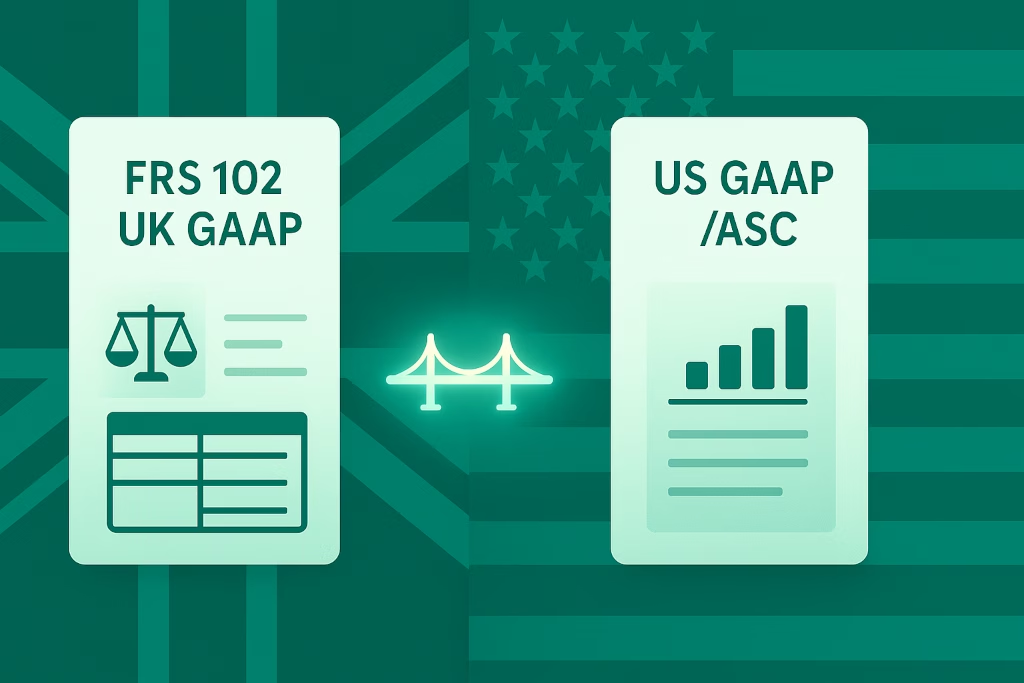
UK GAAP vs. US GAAP: Key Differences in Financial Reporting
When operating across the UK and the US, finance teams face a challenge that goes beyond currency conversions — they must reconcile two fundamentally different accounting frameworks. UK GAAP (Generally Accepted Accounting Practice), governed primarily by FRS 102, and US GAAP (Generally Accepted Accounting Principles), governed by the FASB, differ in their philosophy, structure, and…
-
Financial Consolidation for SMEs: Is It Necessary and How to Start?
Financial consolidation has a reputation for being something large corporations do — a complex process involving teams of accountants, expensive software, and statutory requirements that only apply once a business reaches a certain scale. In practice, the need for consolidation arrives much earlier. Most SMEs that operate through more than one entity hit the consolidation…