
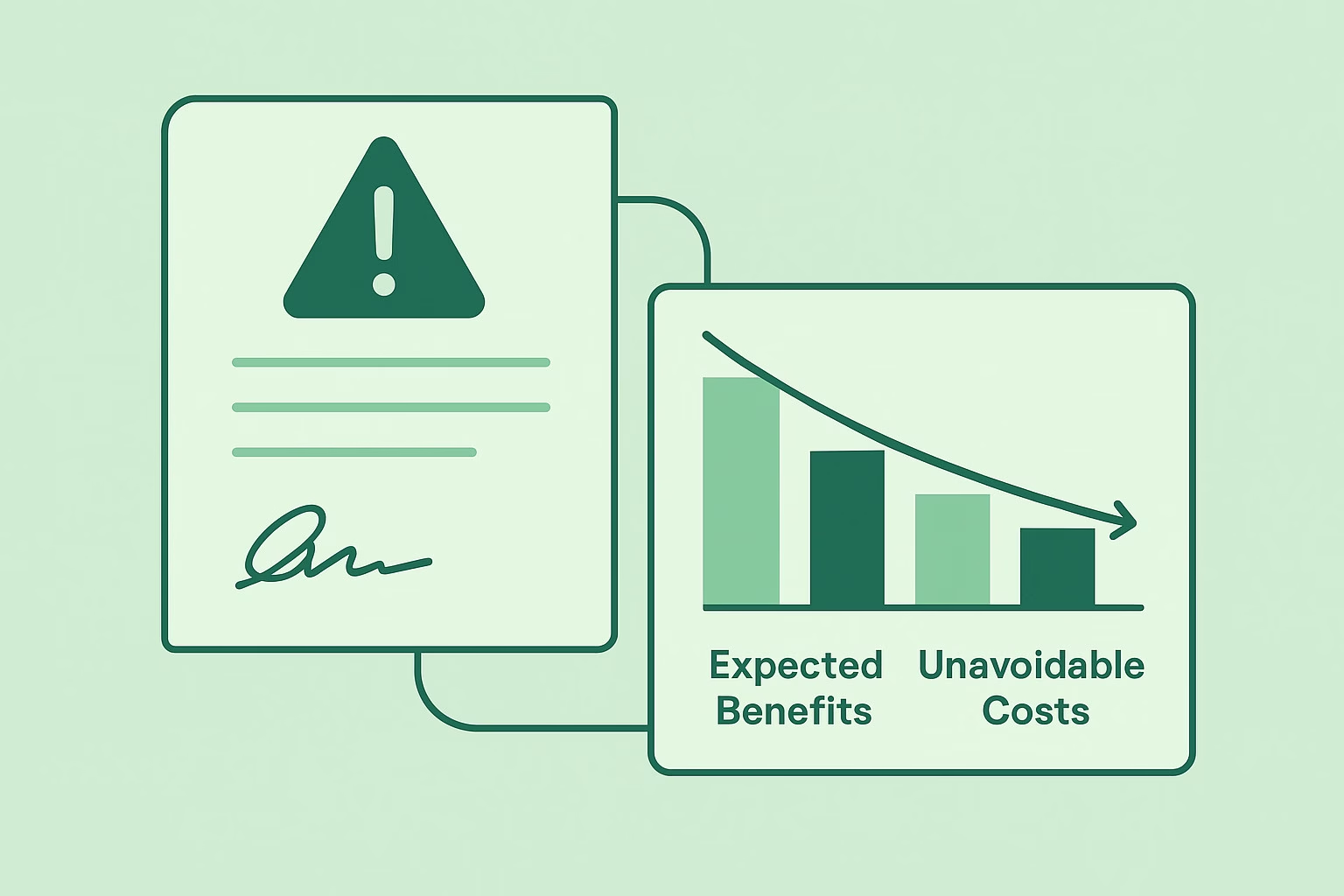
Not all contracts generate value. Sometimes, changing circumstances turn a previously profitable agreement into a costly obligation. In accounting, such situations are addressed through the concept of an Onerous Contract.
Understanding onerous contracts is important because they require immediate recognition of losses, even before the contract is completed.
🔍 What Is an Onerous Contract?
An onerous contract is a contract in which the unavoidable costs of meeting the obligations exceed the economic benefits expected to be received from it.
In simple terms:
The company will lose money no matter how the contract is fulfilled.
Under IFRS (IAS 37), once a contract becomes onerous, the expected loss must be recognized immediately as a provision.
🧾 Key Characteristics of an Onerous Contract
A contract is considered onerous when:
- It is legally enforceable
- The company cannot avoid fulfilling it without significant penalty
- The cost to perform or exit exceeds the expected benefits
The unavoidable cost is the lower of:
- Cost to fulfill the contract
- Cost to terminate the contract (including penalties)
📊 Simple Example
A company signs a fixed-price contract to supply materials for three years.
Later:
- Raw material prices rise sharply
- Production costs now exceed the contract price
Even though the contract is ongoing:
- Future losses are expected
- The contract becomes onerous
- A provision for the expected loss must be recorded immediately
⚖️ Accounting Treatment
When a contract becomes onerous:
- Estimate the unavoidable cost
- Compare it with expected economic benefits
- Recognize a provision for the excess cost
- Record the expense in the income statement
This reflects the principle of prudence, ensuring losses are not deferred.
📘 Where Onerous Contracts Commonly Occur
- Long-term supply agreements
- Fixed-price construction contracts
- Lease agreements for unused facilities
- Outsourcing or service contracts
- Purchase commitments during market downturns
⚠️ Why Onerous Contracts Matter
- They can significantly reduce profits
- They affect provisioning and cash flow forecasts
- They signal operational or market risks
- Poor identification may lead to misstated financial results
Auditors and regulators closely review onerous contract provisions.
🧠 Simple Analogy
An onerous contract is like a gym membership you can’t cancel:
You no longer go, but you must keep paying — and the cost outweighs any benefit.
🪙 Key Takeaway
An Onerous Contract forces companies to face losses early.
By recognizing provisions promptly, financial statements provide a more realistic view of future obligations and risks.