Latest blogs
-

The Future of Business Software Is Proactive, Not Reactive
For thirty years, business software has waited to be told what to do. That relationship is about to reverse — and the organisations that understand it first will have a significant advantage. Every piece of business software in existence today was built around the same core assumption: the user initiates. The user opens the application,…
-

Why We Believe Simplicity Wins in Business Software
We make a deliberate bet at BrizoSystem. It is not a bet most software companies are willing to make, and it costs us in ways that are easy to measure. We choose to do less, better, rather than more, adequately. This is not a story we tell for marketing purposes. It is a constraint we…
-

Operational Intelligence Will Be the Next Big SaaS Category
Business intelligence told you what happened. Operational intelligence tells you what to do next — before the moment passes. Every decade or so, a new software category emerges that seems obvious in retrospect but was genuinely hard to articulate before it arrived. CRM in the nineties. Cloud ERP in the two-thousands. Business intelligence in the…
-
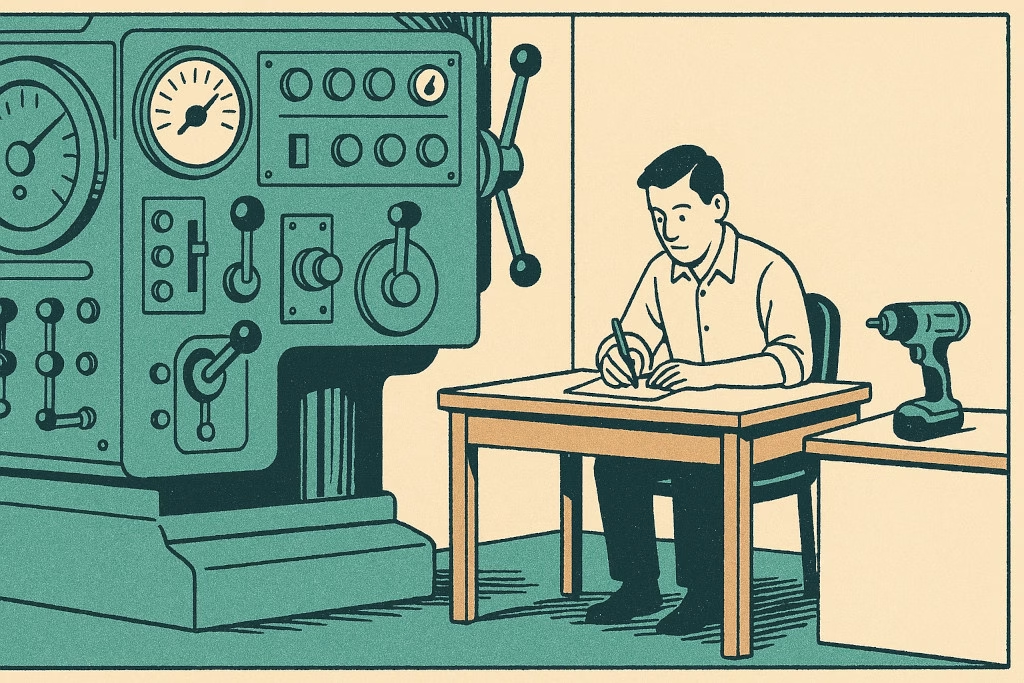
Why Small Businesses Need Lightweight SaaS Instead of Enterprise Suites
Enterprise software was not built for small teams. The cost goes far beyond the subscription fee — and most businesses only realise it after they have already paid it. Somewhere in the history of most small businesses, there is a software decision that seemed sensible at the time. The enterprise suite offered everything — finance,…
-
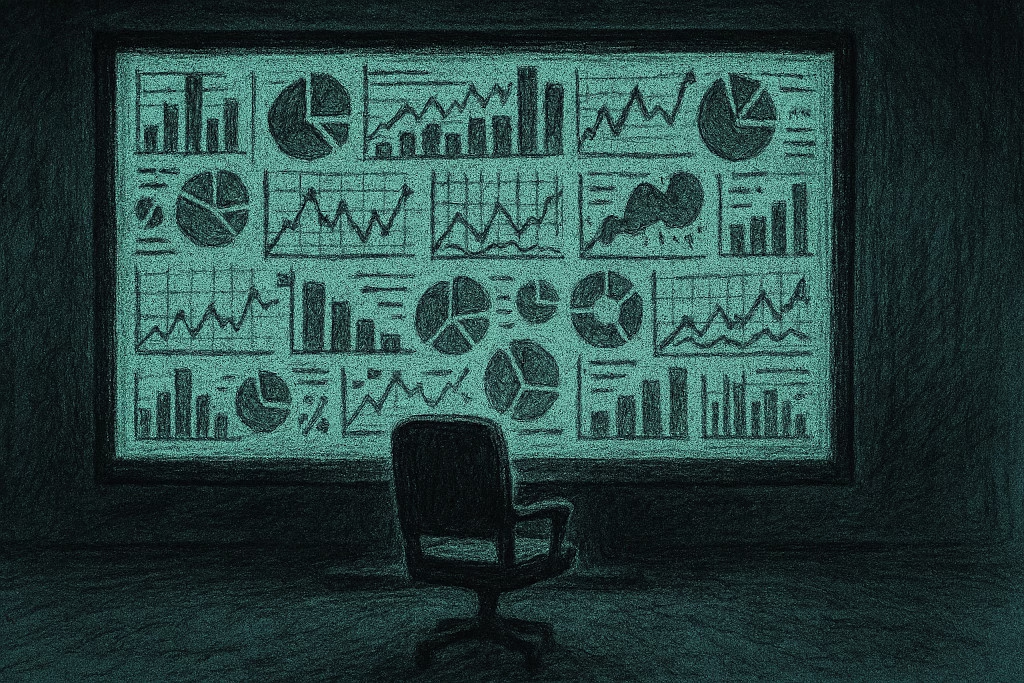
Dashboards Don’t Fail Because of Data — They Fail Because of Noise
There is a specific moment most teams remember: the day they stopped checking the dashboard. Not a dramatic decision. No announcement. The tab just quietly stayed closed a little longer each week until one day it wasn’t opened at all. The tool still worked. The data was still there. The subscription kept renewing. When this…