Latest blogs
-
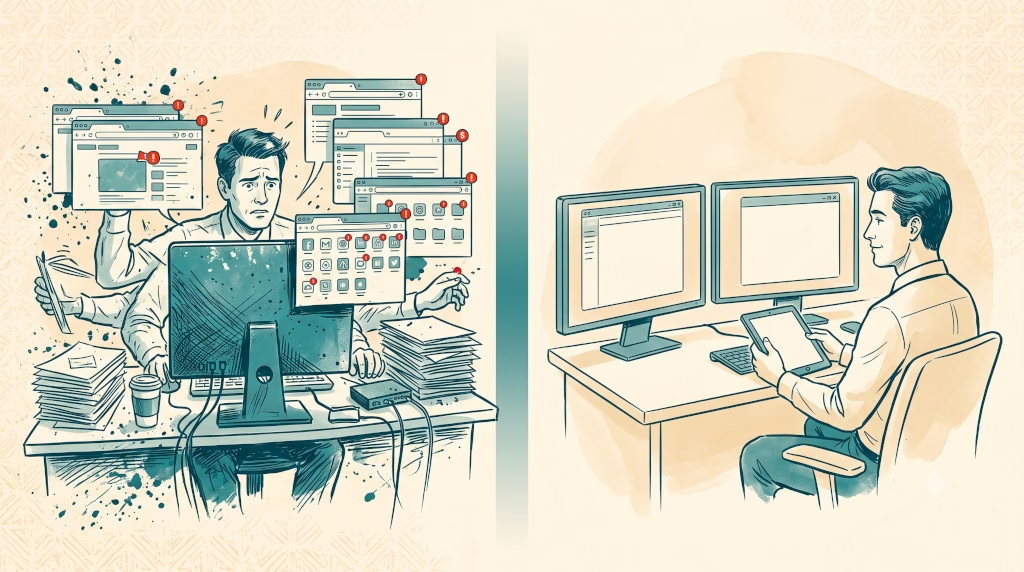
How Modern Teams Can Work Smarter with Fewer Tools
The average team is not suffering from a shortage of software. It is suffering from too much of it — and the overhead of managing the stack has quietly become one of the largest drains on productive time. At some point in the last decade, acquiring software became a proxy for solving problems. A team…
-

Why AI Is Changing How Small Businesses Make Decisions
AI is not replacing the judgment of small business owners and their teams. It is changing what that judgment gets applied to — and that distinction matters more than most people realise. Small businesses have always made decisions at a disadvantage. Not because the people running them are less capable than their counterparts at larger…
-

The Future of Lightweight Operational Intelligence Platforms
The next generation of business software will not be larger, more connected, or more configurable. It will be smaller, faster, and smarter — built to serve the operator rather than the organisation chart. There is a term gaining quiet momentum in product and strategy circles: lightweight operational intelligence. It does not yet have a canonical…
-

The Shift From Reporting Software to Intelligence Software
Reporting software tells you what your business did. Intelligence software tells you what your business should do next. The gap between those two sentences is where most organisations are currently losing ground. Reporting software has been the backbone of business decision-making for decades. The ability to pull structured data from operational systems, aggregate it into…
-

Building Software for Operators Instead of Consultants
Most enterprise software is not actually built for the people who use it every day. It is built for the people paid to implement it — and that distinction explains almost everything wrong with how it feels to use. There is a question that reveals a great deal about any piece of business software: who…