Latest blogs
-

Intercompany Markups, Unrealized Profit, and Their Effect on Group Margins
Intercompany markups serve legitimate purposes: they support entity-level performance measurement, satisfy transfer pricing compliance requirements, and create accountability for cost across the group. But they introduce a specific distortion in group margin reporting that is often underappreciated — not just because unrealised profit needs to be eliminated (which is covered separately), but because the markups…
-
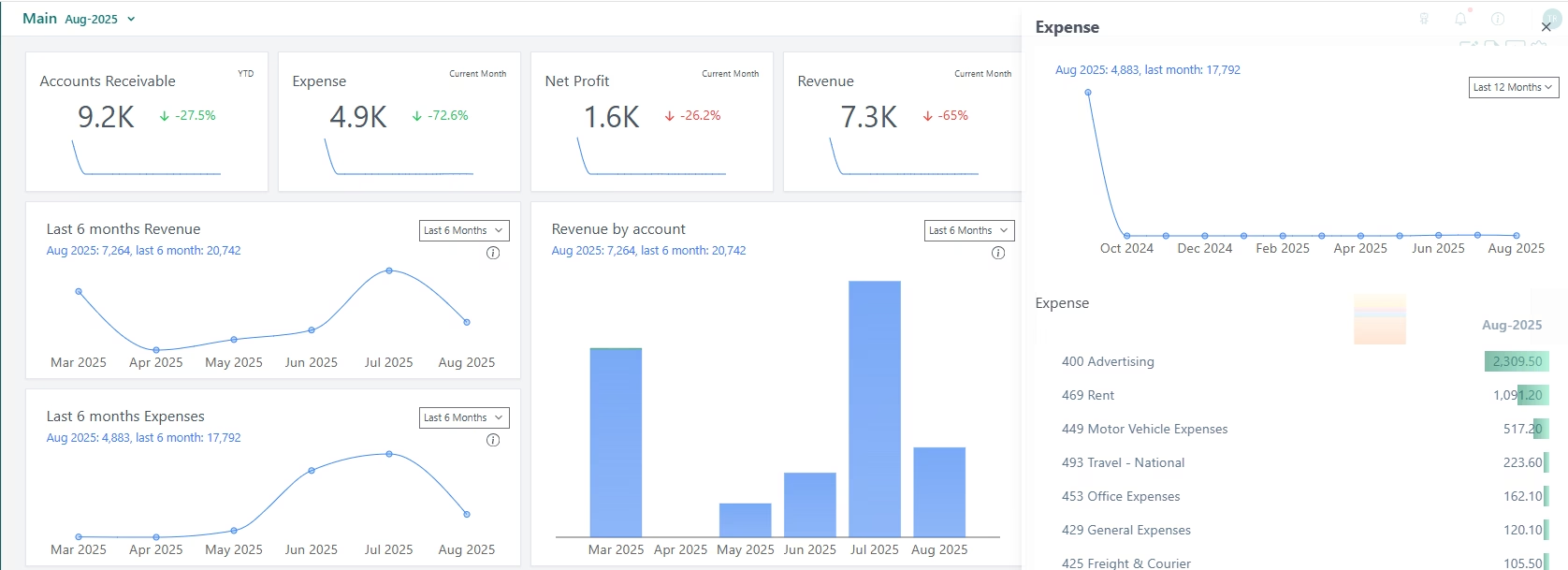
BrizoConsol Monthly Product Update: A Better, Smoother, More Insightful Experience
This month, the BrizoConsol team rolled out several enhancements designed to make your financial reporting experience smoother, clearer, and more collaborative. Here’s a quick look at what’s new. ✨ Refreshed User Interface for a Cleaner Experience We’ve given BrizoConsol a visual refresh to make navigation more intuitive and the overall experience more modern. The improved…
-

Capitalized Interest: Turning Borrowing Costs Into an Asset
When a company borrows money to finance the construction of a long-term asset, the interest incurred during the construction period is not immediately expensed — it is added to the cost of the asset being built. This process is called capitalisation of borrowing costs. Under IAS 23 (Borrowing Costs), capitalisation is mandatory for qualifying assets,…
-

Entity Structures and Reporting Lines: How They Shape Consolidated Results
The consolidation method applied to each entity — whether it’s fully consolidated, equity accounted, or excluded from the group entirely — is determined by the group’s ownership structure. That structure is the first input into every consolidation: before any trial balance is imported, any elimination is posted, or any exchange rate is applied, the system…
-
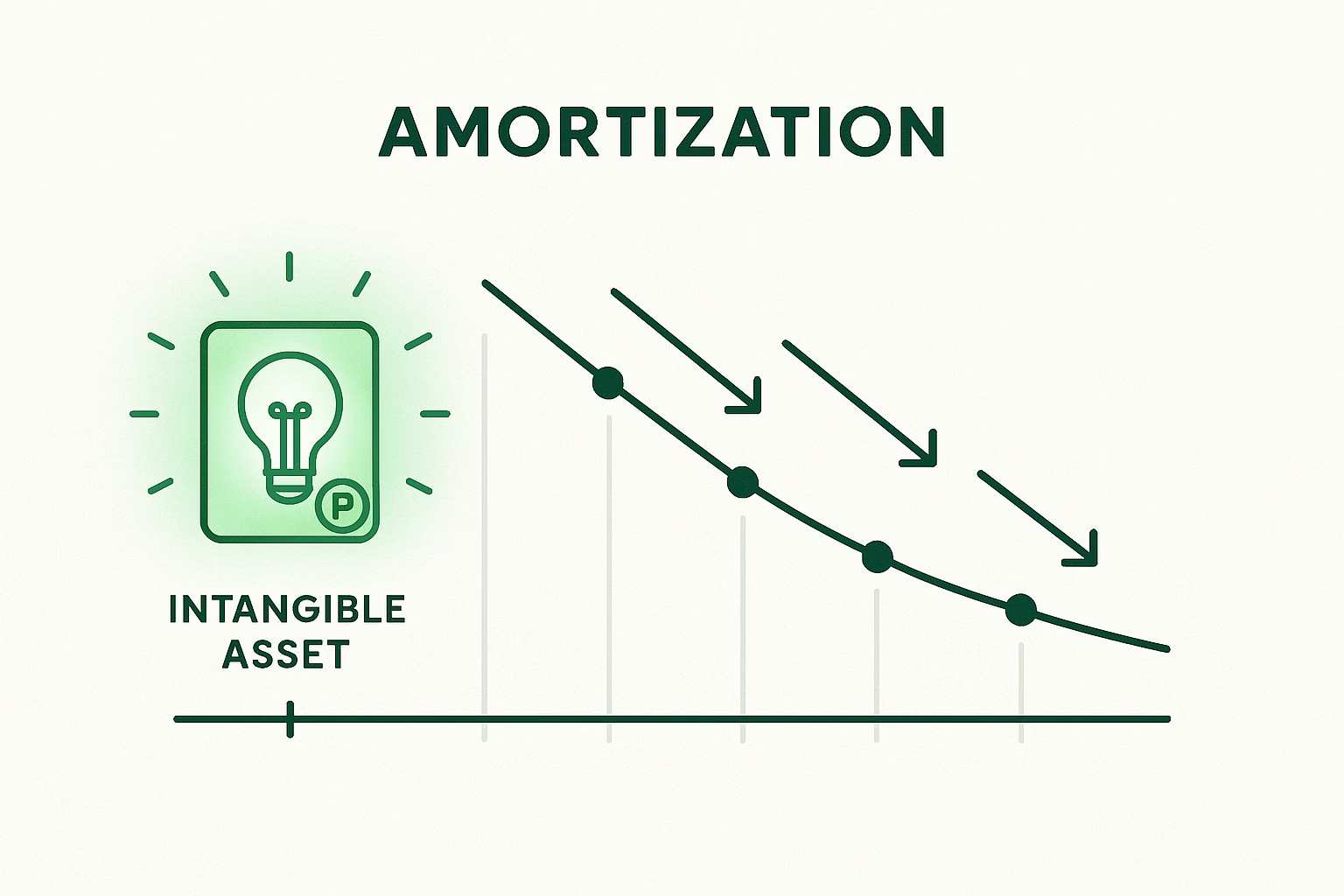
Understanding Amortization of Intangible Assets
Amortization is the systematic allocation of an intangible asset’s cost over its useful life — the period during which the asset is expected to generate economic benefits. It works on the same matching principle as depreciation: the cost of an asset should be recognised as an expense in the periods that benefit from it, not…