Latest blogs
-

The Case for Purpose-Built Software Over All-in-One Platforms
All-in-one platforms promise to eliminate the problem of choosing. What they deliver, more often, is the problem of compromise — spread uniformly across every workflow the platform touches. The appeal of the all-in-one platform is not difficult to understand. One vendor to negotiate with. One contract to manage. One system to train staff on. One…
-

From Financial Reports to Business Intelligence: How Decision-Making Is Evolving
Financial reports answer the question every business has already asked. Business intelligence answers the question every business should be asking next. The shift between them is redefining how organisations make decisions. The financial report has been the primary instrument of business decision-making for as long as businesses have existed in their current form. The balance…
-
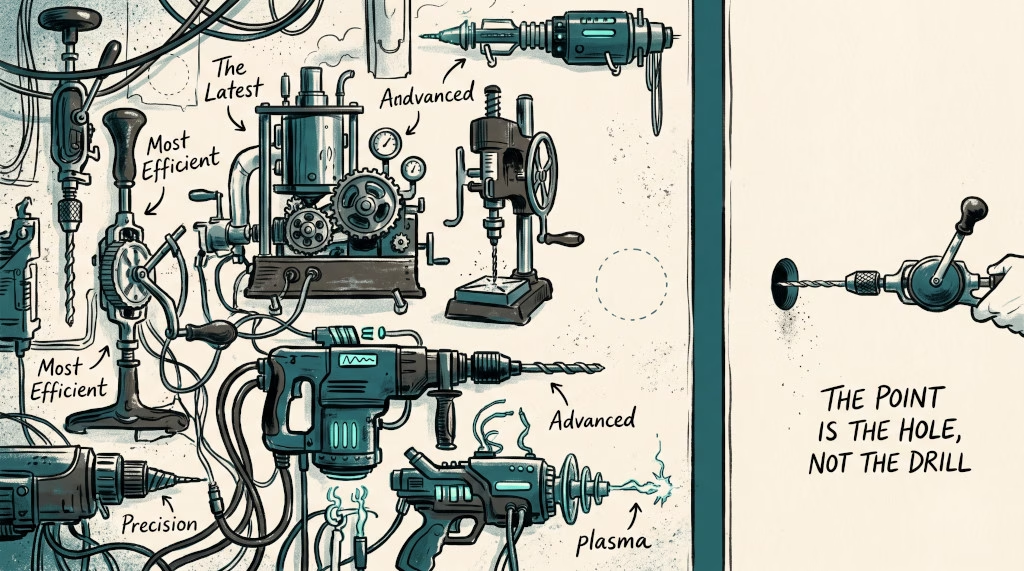
Building Products That Solve Real Problems Instead of Adding More Features
Most software grows by addition. The products that endure grow by subtraction — removing everything that stands between the user and the thing they actually need to do. There is a moment in the development of almost every software product where the team stops asking “what problem are we solving?” and starts asking “what should…
-
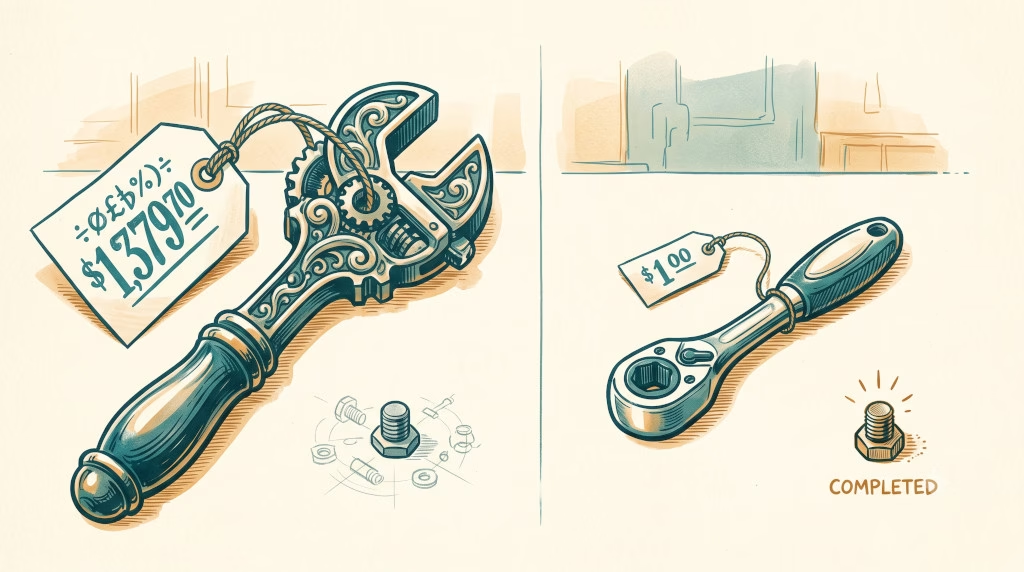
Why Affordable Software Can Outperform Expensive Enterprise Solutions
Price is not a reliable proxy for fit. For most small businesses, the most expensive option is also the least well-suited — and the gap between what they pay and what they get is widening. There is a durable assumption in business software procurement that price signals quality — that a more expensive platform is…
-
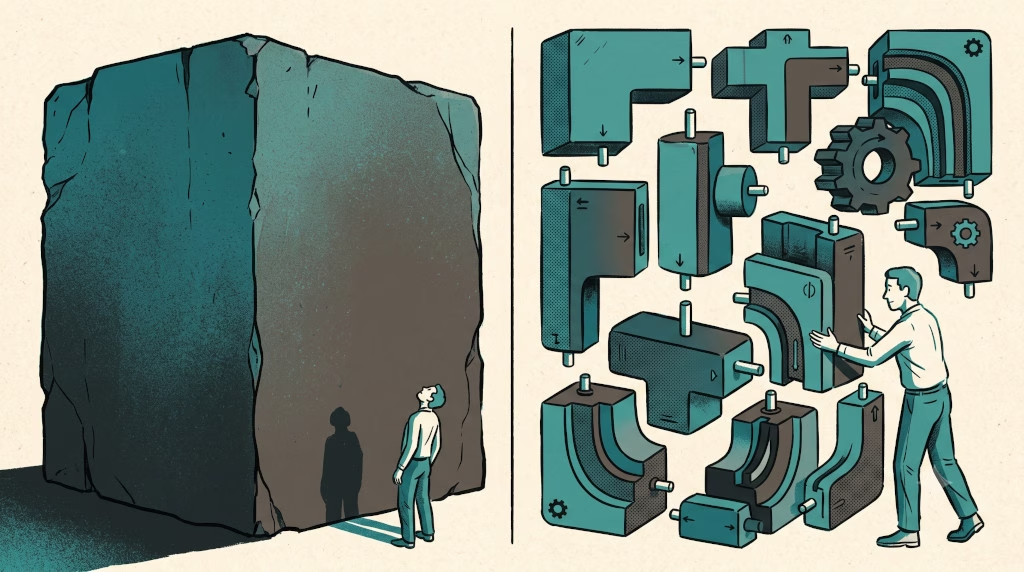
The Future of Business Software Is Modular, Not Monolithic
The all-in-one suite had a compelling pitch. One vendor, one contract, one login. In practice, it delivered one set of compromises for every workflow it touched — and businesses are running out of patience with the trade-off. The monolithic software suite emerged from a reasonable premise: that businesses would rather manage one vendor relationship than…