
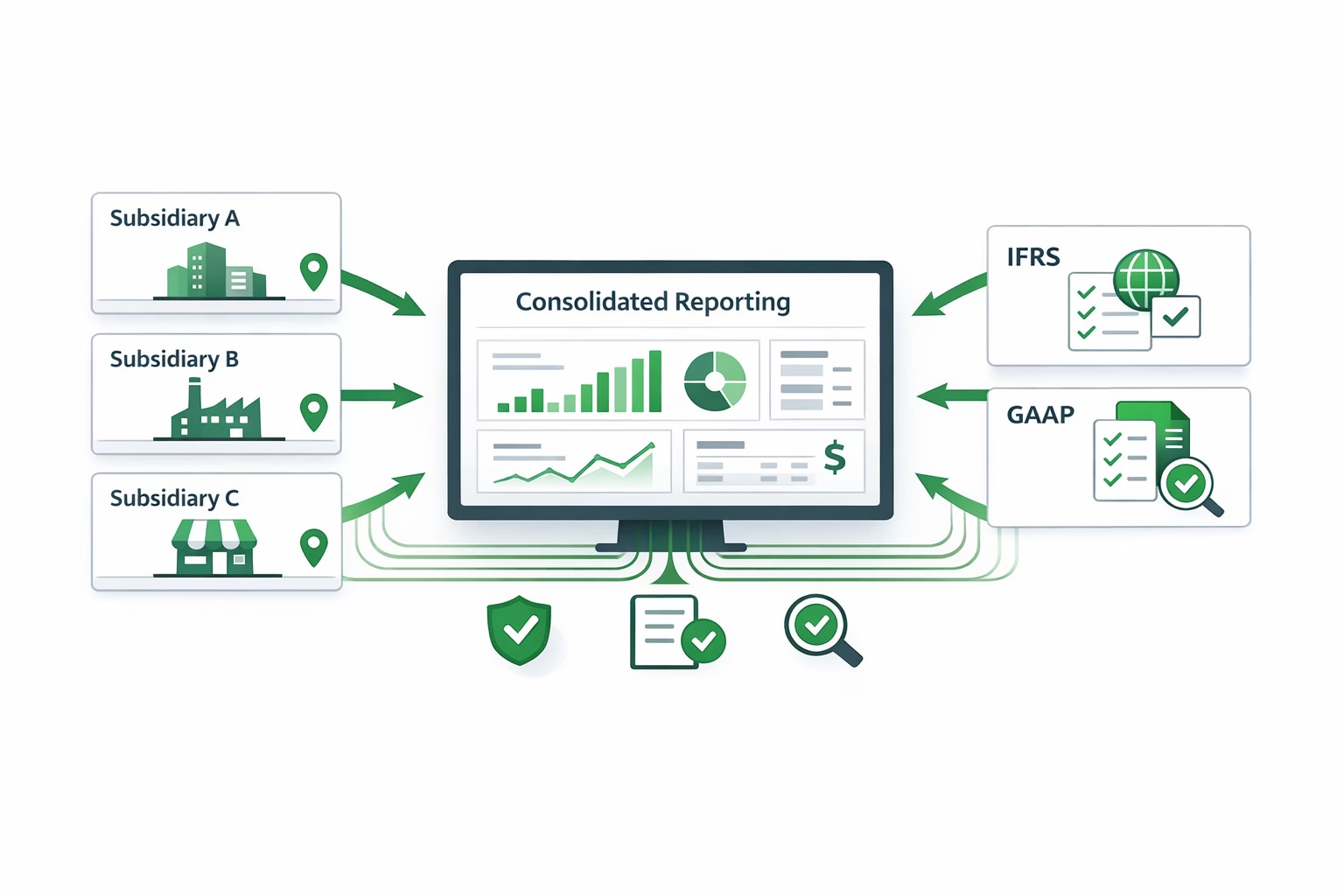
Financial reporting compliance has never been more demanding. As businesses grow across borders, finance teams are expected to comply with IFRS, US GAAP, or sometimes both — while delivering faster closes, clearer insights, and audit-ready numbers.
For many mid-sized companies, the challenge is not a lack of accounting knowledge. It is the lack of structure, consistency, and transparency in how reporting data is consolidated and presented.
This is where modern reporting and consolidation software plays a critical role.
The Growing Complexity of IFRS and GAAP Compliance
IFRS and GAAP are comprehensive frameworks, but compliance becomes significantly more complex at group level.
Challenges increase when:
- Multiple entities follow different local standards
- Adjustments are required for group reporting
- Policies must be applied consistently across subsidiaries
- Disclosure requirements become more detailed
While accounting systems record transactions, compliance issues often surface during consolidation, not at the point of entry.
Why Compliance Is a Reporting Challenge, Not Just an Accounting One
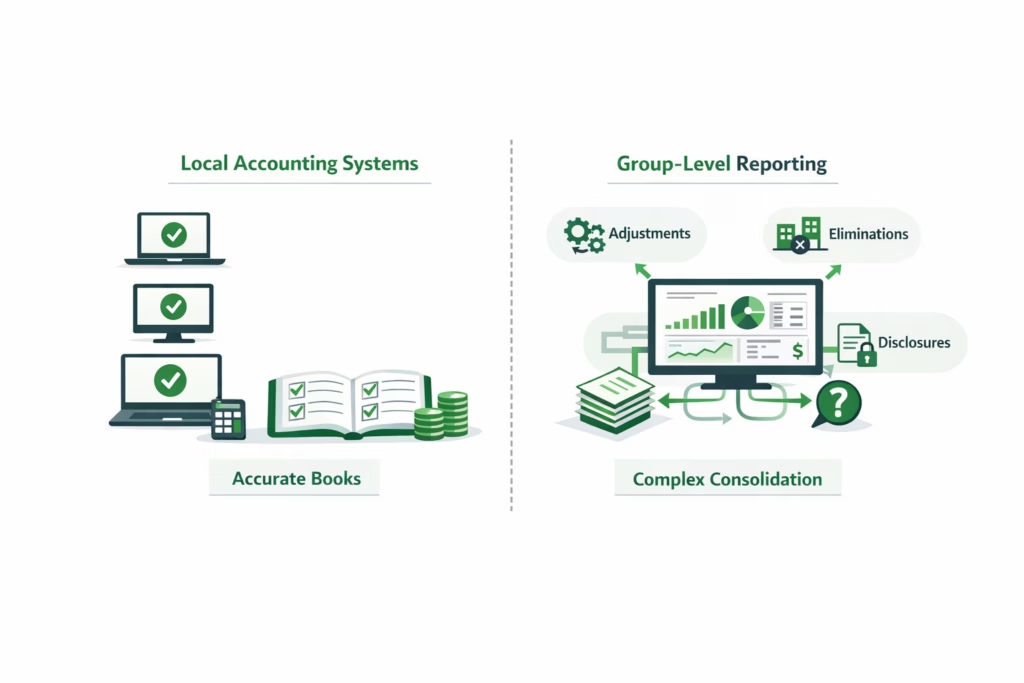
A common misconception is that IFRS or GAAP compliance is fully handled by the general ledger.
In reality:
- Local books may be correct, but group reporting may not be aligned
- Adjustments may exist outside the GL
- Intercompany treatments differ across entities
- FX, ownership, and elimination logic must be applied consistently
Compliance therefore depends heavily on how data is aggregated, adjusted, and reported — not just how it is recorded.
The Role of Modern Software in IFRS and GAAP Compliance
Modern reporting and consolidation software sits above accounting systems and focuses on group-level consistency and control.
It helps finance teams:
- Apply standardized reporting structures
- Manage group adjustments transparently
- Track differences between IFRS and GAAP views
- Maintain clear audit trails
- Produce compliant financial statements efficiently
The result is not automation for its own sake, but controlled compliance at scale.
Supporting Multiple Reporting Standards in Parallel
Many groups need to report under:
- IFRS for statutory reporting
- GAAP for management, investors, or lenders
Modern software enables:
- Parallel reporting structures
- Separate adjustment layers
- Clear reconciliation between standards
This avoids duplicating work while preserving clarity and compliance.
Managing Group Adjustments with Transparency
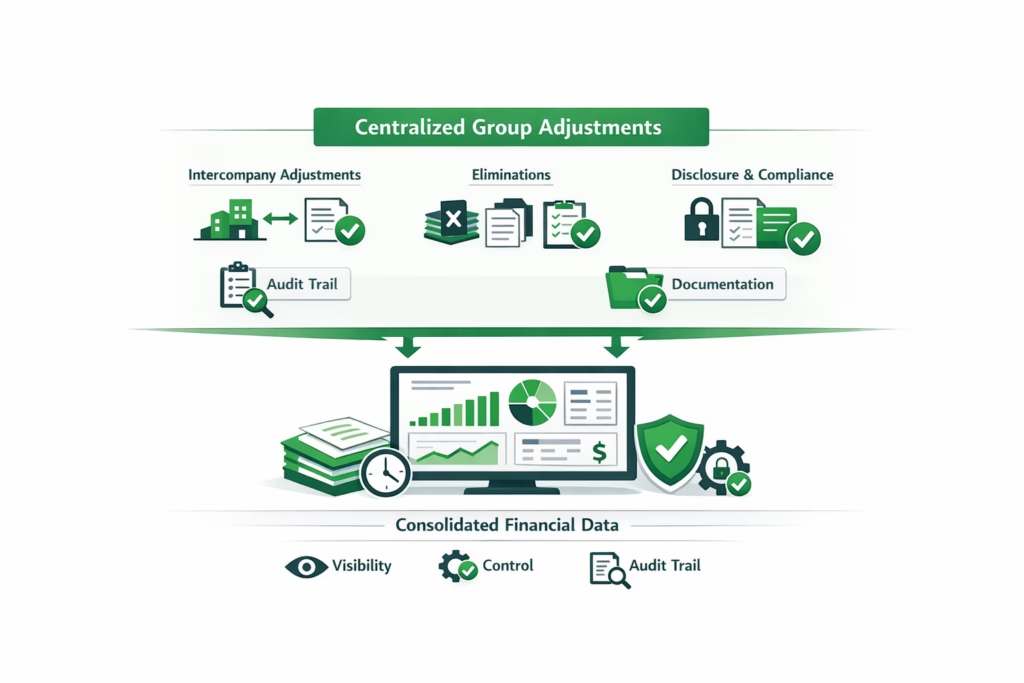
IFRS and GAAP compliance often requires group-level adjustments such as:
- Revenue recognition timing differences
- Lease accounting adjustments
- Deferred tax presentation
- Fair value and impairment treatments
Modern consolidation software allows these adjustments to be:
- Centralized
- Documented
- Reused consistently every period
This reduces reliance on offline spreadsheets and improves audit confidence.
Intercompany Eliminations and Compliance
Intercompany transactions are a major compliance risk if handled manually.
Modern software supports:
- Systematic identification of intercompany balances
- Consistent elimination logic
- Clear visibility into mismatches
- Repeatable treatment across periods
This is essential for presenting true group performance under both IFRS and GAAP.
FX and Translation Consistency
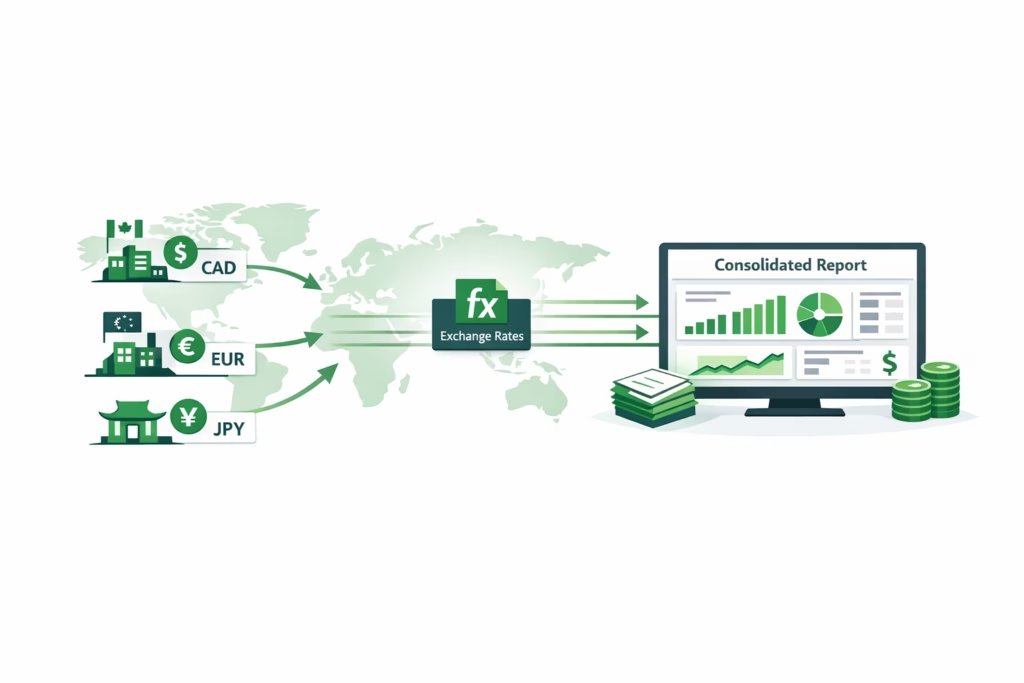
Both IFRS and GAAP require disciplined handling of foreign currency translation.
Modern reporting tools:
- Apply consistent exchange rate logic
- Separate operational performance from FX noise
- Improve comparability across periods
This ensures compliance while enhancing the quality of analysis.
Auditability and Documentation
Compliance is not just about getting the numbers right — it’s about proving how you got there.
Modern software provides:
- Clear audit trails from source data to consolidated results
- Visibility into adjustments and eliminations
- Controlled access and version history
This significantly reduces audit effort and risk.
Why Spreadsheets Fall Short for Compliance
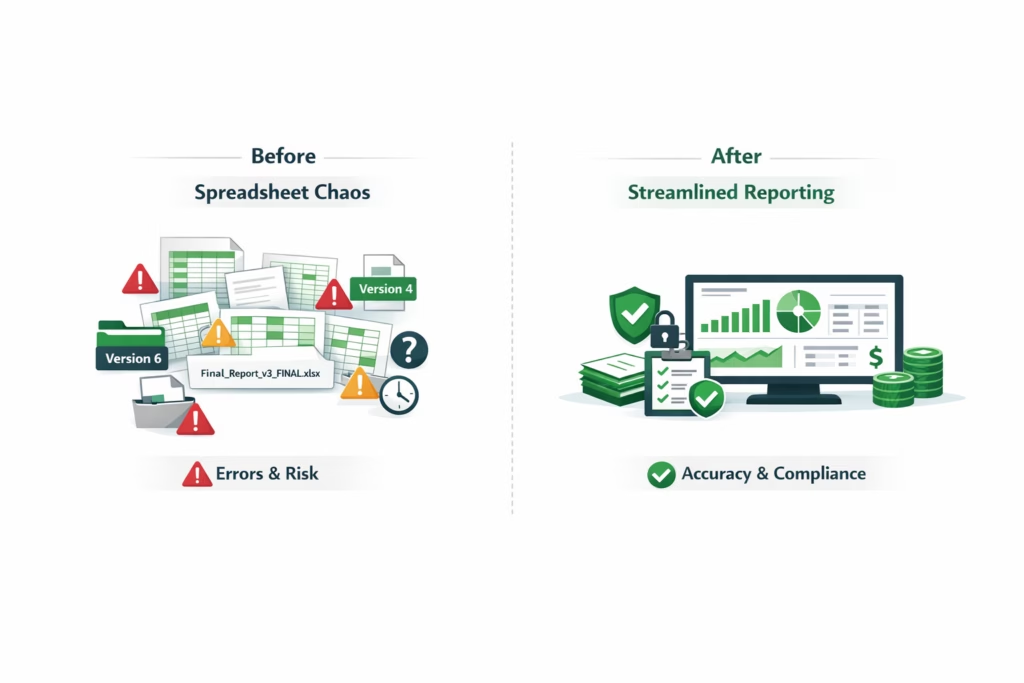
Spreadsheets struggle with:
- Version control
- Repeatability
- Transparency
- Scalability
As compliance requirements increase, spreadsheet-based consolidation becomes a liability rather than a solution.
Compliance as an Ongoing Process, Not a Year-End Event
IFRS and GAAP compliance is not a once-a-year exercise. It requires:
- Consistency across periods
- Discipline in reporting processes
- Clear ownership of group rules
Modern reporting software embeds compliance into the monthly consolidation cycle, rather than treating it as a last-minute adjustment.
Final Thoughts
IFRS and GAAP compliance is ultimately about confidence — confidence in the numbers, the process, and the explanations behind them.
Modern reporting and consolidation software does not replace accounting systems or professional judgment. Instead, it provides the structure and transparency needed to apply accounting standards consistently at group level.
For growing companies, compliance is no longer just about ticking boxes.
It’s about building a reporting foundation that scales, withstands scrutiny, and supports better decision-making.
And in today’s environment, that foundation is increasingly built on modern, purpose-designed reporting software.